Aboard M/Y Ocean's Seven · 16 – 24 August 2026. Eight expedition days north along Greenland's west coast: the great fjord system behind Nuuk, the hanging glaciers of Eternity Fjord, the calving front at Eqi, and the iceberg procession of the Ilulissat Icefjord.
Greenland is the largest island on Earth. Its rocky coastline, stretched into a single line, would run roughly 24,430 miles, close to the circumference of the planet at the Equator. Hardy Inuit communities sit on the edge of the massive Greenland ice cap, and pack ice and bergs calved from its glaciers drift through the waterways.
Bedrock some 3.8 billion years old broods beneath the water, and fjords fringe the western coast, as open to explorer yachting as any geography on the planet.
In the short, vivid summer, land and sea come alive. Migrating whales feed in these productive waters, seabirds fill the air, and caribou and muskoxen move across tundra blooming with moss and saxifrage.
The voyage begins in Nuuk, Greenland's capital, with embarkation and a late-afternoon meeting with Aleqa Hammond, Greenland's first female Prime Minister. A full day follows in the fjord system behind the town, with hikes, kayaking and Zodiac cruising among waterfalls, humpback whales and icebergs. Then north to Evighedsfjorden, Eternity Fjord, where towering mountains and hanging glaciers surround the water and exploratory landings reach the tundra.
North up the coast to Sisimiut, Greenland's second largest town, for a town walk, its excellent museum and craft workshops, with the 4,000-year-old UNESCO archaeological site at Nipisat nearby. Then across to Qeqertarsuaq on Disko Island, the largest and youngest island in Greenland, where glacier-covered basaltic plateaus rise behind the town and large icebergs drift offshore.
Into Disko Bay for the calving front at Eqip Sermia, one of the few places to watch a glacier actively calving, massive pieces of ice breaking off and crashing into the sea. A village visit at Oqaatsut, known as Rodebay, then Ilulissat and its UNESCO-listed icefjord, fed by the most productive glacier in the northern hemisphere. On the final morning, a helicopter transfer to Kangerlussuaq meets the private jet.
North from Nuuk through Eternity Fjord, Sisimiut and Disko Bay to the Ilulissat Icefjord. Click any stop on the map to dive in.
"Fjords fringe Greenland's western coast, as inviting to explorer yachting as any geography on the planet."
West Greenland · Nuuk to IlulissatArrival in Nuuk by private jet and embarkation. Greenland's capital holds 20,000 people, big-city lifestyle set against backcountry and a large fjord system. The Greenland National Museum shows mummies and Inuit skin boats, the Nuuk Art Museum holds local works, and the Katuaq cultural centre offers films, concerts and art.
In the late afternoon, a meeting with Aleqa Hammond, one of Greenland's most influential modern leaders. In 2013 she became the first female Prime Minister of Greenland, and she has also served as chairman of the party Siumut and as a member of the Danish Parliament representing Greenland.
A full day in the fjord system behind the capital: waterfalls, humpback whales and icebergs, with hikes ashore, kayaking and Zodiac cruising beneath the backdrop of Sermitsiaq mountain.
Sailing into ice-strewn waters where conditions set a flexible pace, the yacht arrives in Eternity Fjord, a beautiful area with towering mountains and hanging glaciers surrounding the water. Cruise the fjord for the scenery, explore the coast by tender or kayak, or go ashore for a hike in the tundra. Rare fjords, glacier fronts and exploratory landings.
Sisimiut, "inhabitants by the fox burrows," is the second largest town in Greenland, its port home to a large fleet of trawlers. A stroll through the charming community reaches an excellent museum, craft workshops and colourful houses dotting the mountainside. Nearby lies Nipisat, a UNESCO-listed archaeological site with a rare glimpse into over 4,000 years of human history.
Spectacular views of large icebergs greet the arrival at Disko Island, the largest and youngest in Greenland at only 50 million years old, with glacier-covered basaltic plateaus sliced by alpine troughs and glacial valleys. At Qeqertarsuaq, traces of a pre-Inuit settlement five to six thousand years old have been found; whalers founded the town in 1773, and hunting and fishing remain the primary occupations.
Eqip Sermia stands as a powerful symbol of nature's force, one of the few places to watch a glacier actively calving: massive pieces of ice breaking off and crashing into the sea, the sound echoing like thunder across the Arctic silence. As the climate warms, glaciers like this are changing faster than ever before.
Oqaatsut, also known as Rodebay, is a small and peaceful settlement about 20 kilometres north of Ilulissat, home to only a few dozen people: colourful wooden houses, a small church and a local restaurant, with fishing and hunting still central to the community. Towering icebergs drift through the nearby waters, broken off from the Ilulissat Icefjord. A village visit and a hike, then cruising toward Ilulissat.
Ilulissat means "The Icebergs," set beside the fjord fed by Sermeq Kujalleq, the most productive glacier in the northern hemisphere. Its procession of icebergs moves down the 30 mile fjord into Disko Bay at about 20 million tons per day, and the icefjord is a UNESCO World Heritage Site. A trail through tundra wildflowers reaches the old settlement of Sermermiut, with a stunning view over the icebergs; sightseeing flights over the icecap and scenic cruising among the bergs are options.
On the morning of 24 August, a helicopter transfer from Ilulissat to Kangerlussuaq, where the private jet departs. If time allows before the transfer, a final visit to the UNESCO site and the Sermermiut viewpoint.
M/Y Ocean's Seven is a 41.9-metre (137'6") expedition yacht, built by Kingship in 2012 and refitted in 2024, designed inside and out by Vripack on a steel hull.
She accommodates up to twelve guests in five staterooms, with a crew of nine, and carries a range of 4,500 nautical miles at 10 knots.
Stabilisers run at anchor and underway. On deck: a sundeck bar, a hot tub, sun and shade lounging, and gym equipment, with tender and water-toy storage for expedition days ashore.
Ben Haggar is a Canadian Expedition Leader and Guide with 12 years of experience in the Polar Regions, based in Squamish, British Columbia. Ben holds a Senior Polar Guide certification from the Polar Tourism Guide's Association and has led trips in Greenland, Svalbard, the North West Passage and Antarctica, as well as Nepal, the European Alps and Southern Africa several times.
When Ben isn't guiding, he runs a successful photography business and has shot assignments in over 50 countries on all 7 continents for publications such as National Geographic, Outside Magazine, Men's Journal, and the National Post as well as international campaigns for top outdoor brands Patagonia, Arc'teryx and Rab Equipment.
Memorable highlights include bike-packing the largest ice-free portion of Greenland for National Geographic Traveler, working with the BBC on Frozen Planet II and Mammals documentaries, and filming avalanche rescue dogs for the IMAX feature Super Power Dogs. When Ben isn't guiding or shooting moving and still images, he loves spending time in wild places climbing, surfing, mountain biking and split-boarding.
During his career, Captain James Griffiths has worked in a wide variety of roles onboard some of the best-known passenger ships in the world.
He was appointed Chief Officer onboard the Queen Mary 2 at the age of 25 and Master of the National Geographic Explorer at the age of 29. He was the Master onboard National Geographic Orion during her maiden antarctic peninsular season and was Master of the Star Legend during her inaugural season. He has been working in polar waters since 2008, when he was the ice officer onboard National Geographic Explorer in Antarctica.
Captain Griffiths is currently working as Senior Master of the Scenic Eclipse and has extensive Ice Navigation & Command experience in both Polar Regions including work as Ice Pilot. He also holds a Pilot Exemption Certificate for Svalbard, Advanced Polar Waters Certification and is a Nautical Institute 'Level 2' Qualified Ice Navigator. He has also worked shore side for Windstar Cruises in Maritime Operations, covering the duties of Fleet Captain and setup the 'Windstar Signature Expeditions' Project which included all aspects of program creation, from Itinerary development, budgeting, ship modification, purchasing and ultimately product delivery as 'Expedition Captain'.
Captain Griffiths holds an RYA powerboat instructor and has worked as 'Principal' of training centers in charge of training Expedition Staff in the use of Zodiacs in Polar regions.
Layers are everything. West Greenland in late August runs cool and changeable: clear and mild one hour, wind and rain off the ice the next. Pack for wet zodiac landings and bright glare on the water. Tick items off as you go: your progress is saved on this device.
Expect average temperatures between 0°C – 7°C (32 – 45°F), and conditions that change fast. Dress in layers so you can adjust through the day. A typical dress for a landing:
Expedition Clothing
Equipment & Personal
Documents & Logistics
A short shelf for the days at sea. The first three are the classics of the north; the last three range from a Togolese traveller's years in Greenland to the sagas of the island's Norse settlers.
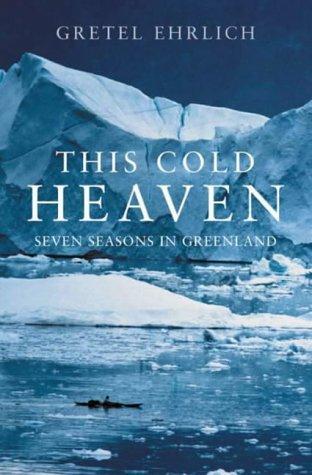
Seven seasons in Greenland. The best single book for understanding the land, the ice, and the Inuit communities you will pass.
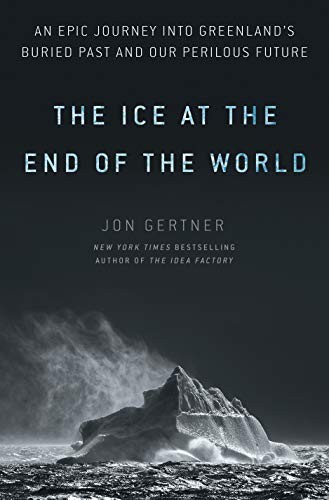
The story of the Greenland Ice Sheet, from Nansen's first crossing to the satellite era. Read it before you see the ice for yourself.
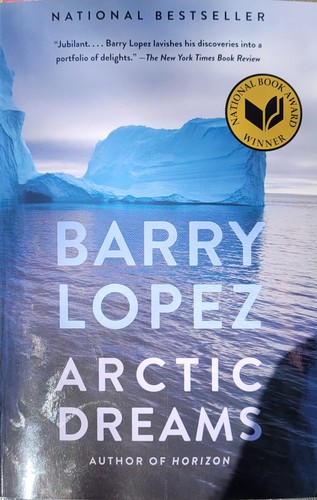
The definitive literary account of the far north and a National Book Award winner. Still the place to start.
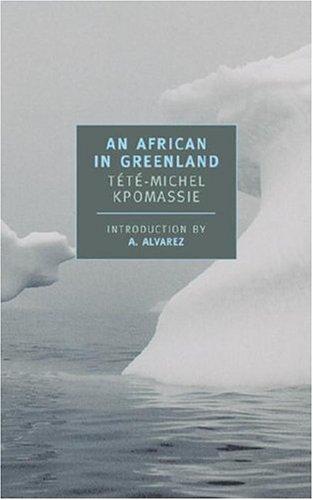
A teenager from Togo reads a book about Greenland and spends years working his way north. A warm, beloved Arctic travelogue.
A sweeping novel of Norse Greenland: the medieval farming settlements whose ruins still stand along the island's southern fjords.
The Saga of the Greenlanders and Erik the Red's Saga. Erik settled Greenland around 985, and the sagas follow the Norse voyages onward toward North America.
Recommended Viewing
The Extreme Ice Survey documentary. Time-lapse footage of Greenland's glaciers retreating, including some you will see.
The Arctic episodes cover the wildlife and ice of exactly this coast. Watch "Frozen Lands" and "Frozen Oceans".
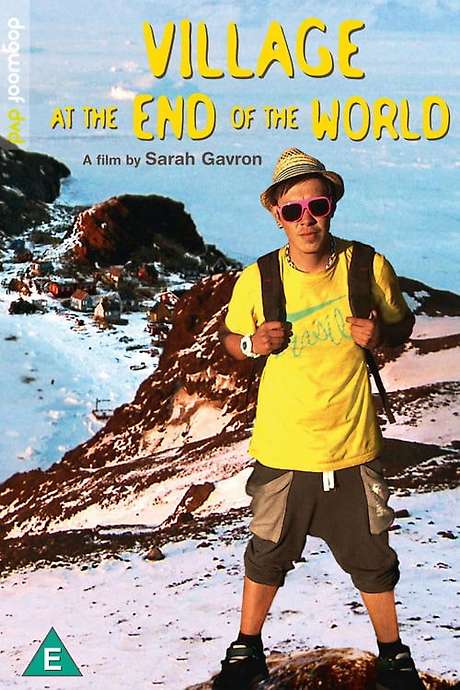
An intimate portrait of life in a remote Greenlandic village of fifty-nine people. The human side of this coast.

Binoculars are essential for quality viewing of distant wildlife and birds, and you will use them often, so it is worth investing in a quality pair. The first number is magnification, the second the front-lens diameter in millimetres; 8×42 or 10×42 are popular all-round choices. A short list across price ranges follows. For high-end options or individual advice, contact us.
Binoculars

A golden-mean objective that still gathers light at dawn and dusk. Waterproof to 13', nitrogen-filled and fog-proofed, with HD glass and up to 90% light transmission.

A step up, with a best-in-class HD optical system for the sharpest images in its class, covered by Vortex's lifetime warranty.

Phase-corrected, multi-coated prisms for high-contrast, true-colour images. A light magnesium chassis with rubber armour, waterproof and fog-proof, plus Leica's Adventure Strap system.

Fully multicoated ED-glass optics and phase-corrected roof prisms in a rubber-armoured, fog-proof housing. A 5.5° field of view that focuses to within nine feet.

A compact, weather-sealed, fog-proof body with multicoated BAK4 prism glass for clear, bright, detailed images.
Image-stabilised binoculars are available but tend to be expensive and heavy, so they are not included here.
Spotting Scopes
Weigh portability against light-gathering: smaller 60–66 mm bodies travel easily, while larger objectives are brighter at distance and in low light. Angled eyepieces suit comfort, straight bodies are easier for beginners to aim. Eyepieces are sold separately on the Kowa models.

A mid-sized 60 mm objective with good light-gathering in a compact, waterproof, fog-proof body. The 601 is angled, the 602 straight; eyepiece purchased separately.

XD (extra-low dispersion) glass and Kowa's C3 multi-coatings minimise chromatic aberration for crystal-clear, high-contrast images, in a magnesium-alloy body. The 773 is angled, the 774 straight; eyepiece required.

A high-end scope: advanced optics deliver distortion-free, flat-field images with edge-to-edge sharpness, strong resolution and colour accuracy.
Tripods
A good tripod that can carry a heavy scope is essential, since scopes are used mostly aboard. Heads are sold separately: look for a ball or video head that pans and tilts rather than a fixed camera head.
The light, the wildlife and the ice make West Greenland one of the most rewarding places to photograph. A few things worth knowing before you sail.
In the Field
For the camera and lenses you bring on deck and ashore.
On Your Phone
Tips for shooting on a phone.
Your EYOS expedition team is here for anything you need before departure.